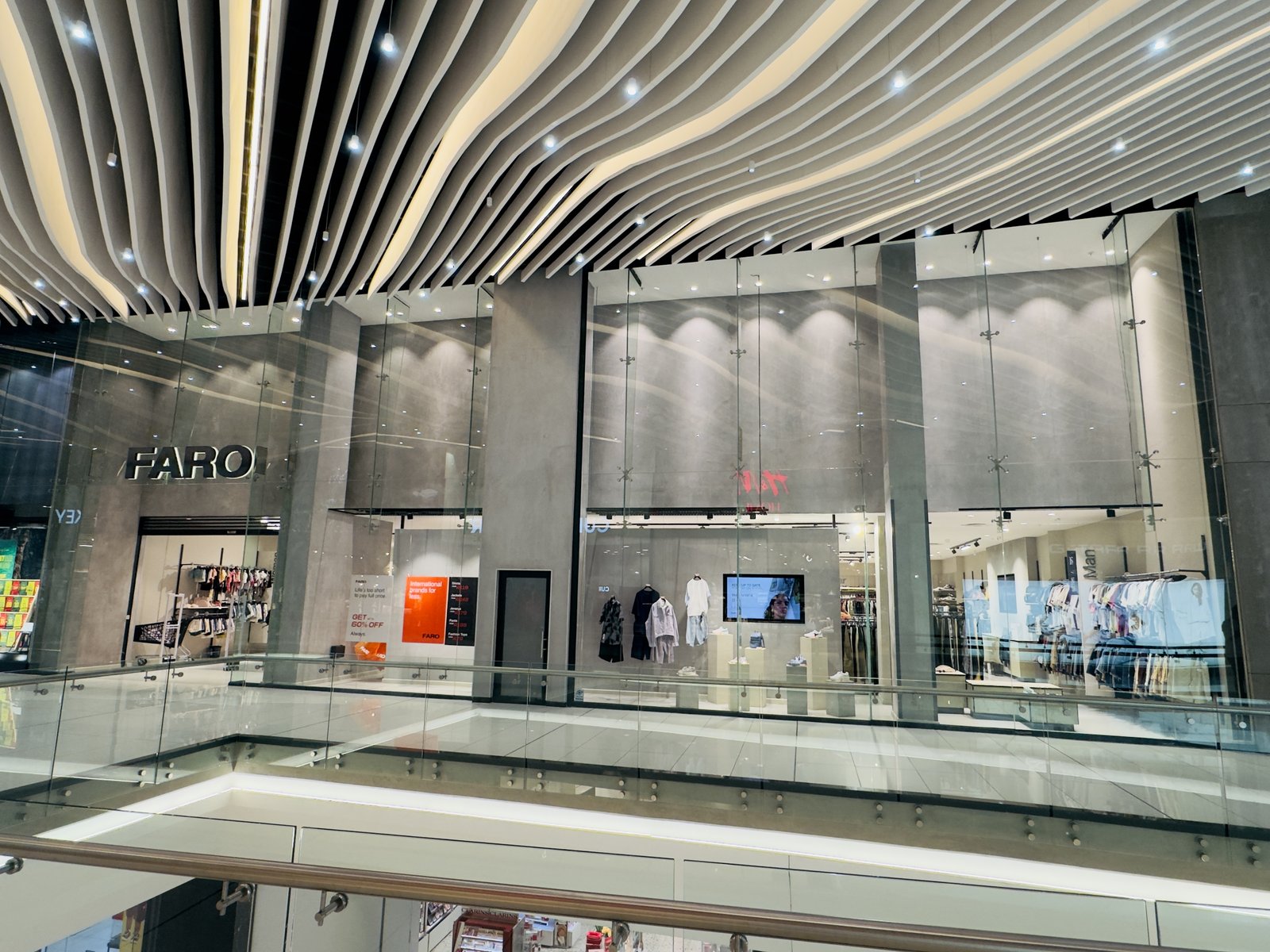

Aluminium shopfronts give a business a bright, secure and professional glazed frontage that pulls customers in. This guide covers aluminium shopfronts in South Africa – the types, glazing, security and cost, and where they work best – for retailers and businesses from Johannesburg and Pretoria to Cape Town and Durban.
What is an aluminium shopfront?
An aluminium shopfront is the glazed frontage of a shop, office or showroom, built from powder-coated aluminium framing and large panes of glass. It combines display windows, entrance doors and fixed screens into one clean, modern facade. Aluminium is the material of choice because it carries big glazed spans, resists corrosion, and needs almost no maintenance – so they still look sharp after years of heavy footfall.
Types of aluminium shopfronts
There are three broad options: framed shopfronts with slim aluminium sections around each pane, frameless glass for a seamless, high-end look, and full glazed facades for larger frontages. Any of them can include sliding or folding entrances, and for hands-free access you can add automatic doors. They scale from a single store to a whole shopping centre or mall.

Glazing and security
Retail glazing has to be safe and secure. Aluminium shopfronts are glazed with toughened or 6.38mm laminated safety glass that holds together if broken, framed in robust sections with multi-point locking, and can be paired with roller shutters after hours. The result keeps stock visible and inviting by day and secure by night.
Where aluminium shopfronts are used
You will find them on retail stores, shopping centres, restaurants, showrooms, offices and service stations. For the wider commercial range see our commercial aluminium windows and doors page, and for high-footfall retail specifically, our aluminium shopfronts for malls and shopping centres page goes deeper.
Aluminium shopfronts across South Africa
Coetz supplies shopfronts nationwide, made to order and delivered direct – across Johannesburg, Pretoria and the wider Gauteng, Cape Town, Durban, Gqeberha and beyond. We build local too: see examples such as aluminium shopfronts in Sandton and Roodepoort. Wherever you are, you deal with the manufacturer, not a chain of markups.

What do aluminium shopfronts cost?
The cost depends on the size of the frontage, the glass specification and how complex the facade is. Because we manufacture and supply direct, you get factory pricing, and for a signature or non-standard facade, Coetz Custom designs and builds to the building. Aluminium natural corrosion resistance means the shopfront lasts, protecting the investment.
Why aluminium for a shopfront?
Timber and steel struggle with a busy retail frontage – one rots and repaints, the other rusts. Aluminium does neither. It carries large glazed spans on slim frames, so a store gets maximum display glass and natural light, and powder-coated finishes hold their colour and brand look for years with just a wipe-down. It is strong and secure too, which is exactly what a street-level frontage needs. That mix of light, strength and low upkeep is why aluminium is the default for modern retail.
Framed versus frameless shopfronts
A framed shopfront uses slim aluminium sections around each pane and is the most versatile, cost-effective choice for most stores. Frameless glass drops the visible framing for a seamless, premium look that suits flagship and boutique stores. Many centres mix the two – framed screens along the mall with a frameless feature entrance. We help you choose the right balance of budget, security and look for your space.

Aluminium shopfronts FAQ
What are aluminium shopfronts?
They are the glazed frontage of a shop or office – powder-coated aluminium framing and glass, combining display windows, entrances and screens.
Are aluminium shopfronts secure?

Yes – with laminated safety glass, robust framing and multi-point locking, and they pair well with roller shutters for after-hours security.
Do you supply shopfronts nationwide?
Yes – we supply and install aluminium shopfronts across South Africa, from Johannesburg and Pretoria to Cape Town and Durban.
Can you build a bespoke facade?
Yes – Coetz Custom designs and manufactures bespoke shopfronts and glazed facades to the building.
Get an aluminium shopfront quote
Send us your shopfront or facade drawings and we will quote your project anywhere in South Africa.
What to expect from Coetz Glazing
Every aluminium shopfronts project at Coetz starts with a free site measure, so we can confirm the opening, the power supply and the traffic flow before quoting a fixed price.
We manufacture each unit from a durable aluminium frame, glaze it with 6.38mm laminated safety glass, and finished to your specification.
Because we manufacture and supply every aluminium shopfronts ourselves, one accountable team looks after your order from quote to delivery, ready for installation by your own contractor.
The structure behind aluminium shopfronts
A shopfront is a structural opening filled with glass, and the structure is what most quotations gloss over. The head above the opening carries load and must be straight and adequately supported; any deflection shows up immediately as doors that will not align and glazing beads that will not sit. On a tenant fit-out the head is usually a given, which makes establishing its condition the first job rather than an afterthought.
Pane size, thickness and wind load
Glass thickness is not a style choice. It is driven by pane size, the exposure of the elevation and the wind load the opening will see, and a large pane in an exposed position is a different specification from the same pane in a sheltered arcade. Where a shopfront carries unusually large panes, that calculation should be confirmed rather than assumed — the relevant requirements are set out in standards published by the South African Bureau of Standards.

Integrating the entrance into aluminium shopfronts
Almost every shopfront contains a door, and the door is where the elevation succeeds or fails in daily use. A hinged leaf needs clear swing space and is simple mechanically. A slider keeps everything within the wall line, which matters on a walkway or arcade. A powered entrance adds hands-free access and can integrate with access control, and on a high-traffic retail unit it is often the right answer — see planning a shopfront around an automatic door operator for how the operator header affects the design.
Decide the entrance type before the shopfront is set out, because the operator header, the swing arc or the sliding track all consume space that has to come from somewhere in the elevation.
Security on a glazed elevation
Security comes from the whole assembly rather than the lock. The glass matters: Coetz™ glazes as standard with 6.38 mm clear laminated safety glass, which holds together on impact because the interlayer retains the fragments — a meaningful difference on a street-facing elevation. Beyond that, the locking points, how the frame is fixed into the structure, and whether a shutter or grille is required after hours all form part of the same decision.
Manifestation and visibility
A large, clean pane is close to invisible to someone walking at pace. A band of film, frit or applied graphics at eye level is routine on commercial aluminium shopfronts, not a decorative extra, and it should align across fixed and opening panels when the entrance is closed.

Thresholds, drainage and where shopfronts fail
Glazed elevations leak at the bottom far more often than the top. The threshold has to be crossable and still shed water away from the building, and the junction between the track or cill and the finished floor decides whether driven rain runs out or in. Agree that detail before anything is fitted, and keep the drainage path clear afterwards — blocked weep holes trap water in the frame, which is what damages seals and stains finishes over time.
Signage, services and the things that get forgotten
Signage is fixed to something, and on aluminium shopfronts that something is often the frame. Establish early whether signage, lighting or a security shutter will be mounted on the shopfront, because fixing into a glazed frame after installation is far harder than allowing for it at manufacture. The same applies to any power or data cabling that has to cross the elevation.
Landlord requirements on tenant fit-outs
In a centre or arcade the landlord usually has a shopfront specification: setback lines, permitted materials and finishes, signage zones, and sometimes the entrance type. Obtain it before designing, because a shopfront that has to be altered to satisfy a landlord after manufacture is an expensive lesson. Where the centre has a house standard for finishes, match it at specification stage.
Lead time, delivery and installation
Coetz™ manufactures to order with a lead time of 1–2 days, and aluminium shopfronts are supplied only — installation is arranged through your own shopfitter or contractor. Large glazed panels are heavy and must be moved upright, never flat, so plan access and lifting before delivery day. Protect the track and the glass through the remainder of the fit-out; most damage we see on new work happens after the shopfront is in but before the unit opens.
Aluminium shopfronts: frequently asked questions
What are aluminium shopfronts made of?
An aluminium framing system carrying glass panes, fixed into the structural opening, usually including an entrance door. Coetz glazes as standard with 6.38 mm clear laminated safety glass.
How much do aluminium shopfronts cost?
It depends on the opening size, the number and size of panes, the entrance type, the glass specification and the finish. Two shopfronts of identical width can differ substantially once the entrance and glass are specified.
Can a shopfront include an automatic door?
Yes, and it is common on retail units. The operator header needs space above the opening, so the entrance type should be decided before the elevation is set out.
What glass is used in a shopfront?
6.38 mm clear laminated safety glass is our standard. Larger panes, exposed elevations or specific regulatory requirements may call for a different specification, confirmed against the actual opening.
Do you install aluminium shopfronts?
Shopfronts are supplied only, with installation arranged through your own shopfitter or contractor. Automatic door systems are supplied, installed and serviced.
How long does a shopfront take to manufacture?
Standard manufacture is 1-2 days from order. Allow additional time for site measurement, landlord approval on a tenant fit-out, and coordinating your installer.
Leave a Reply