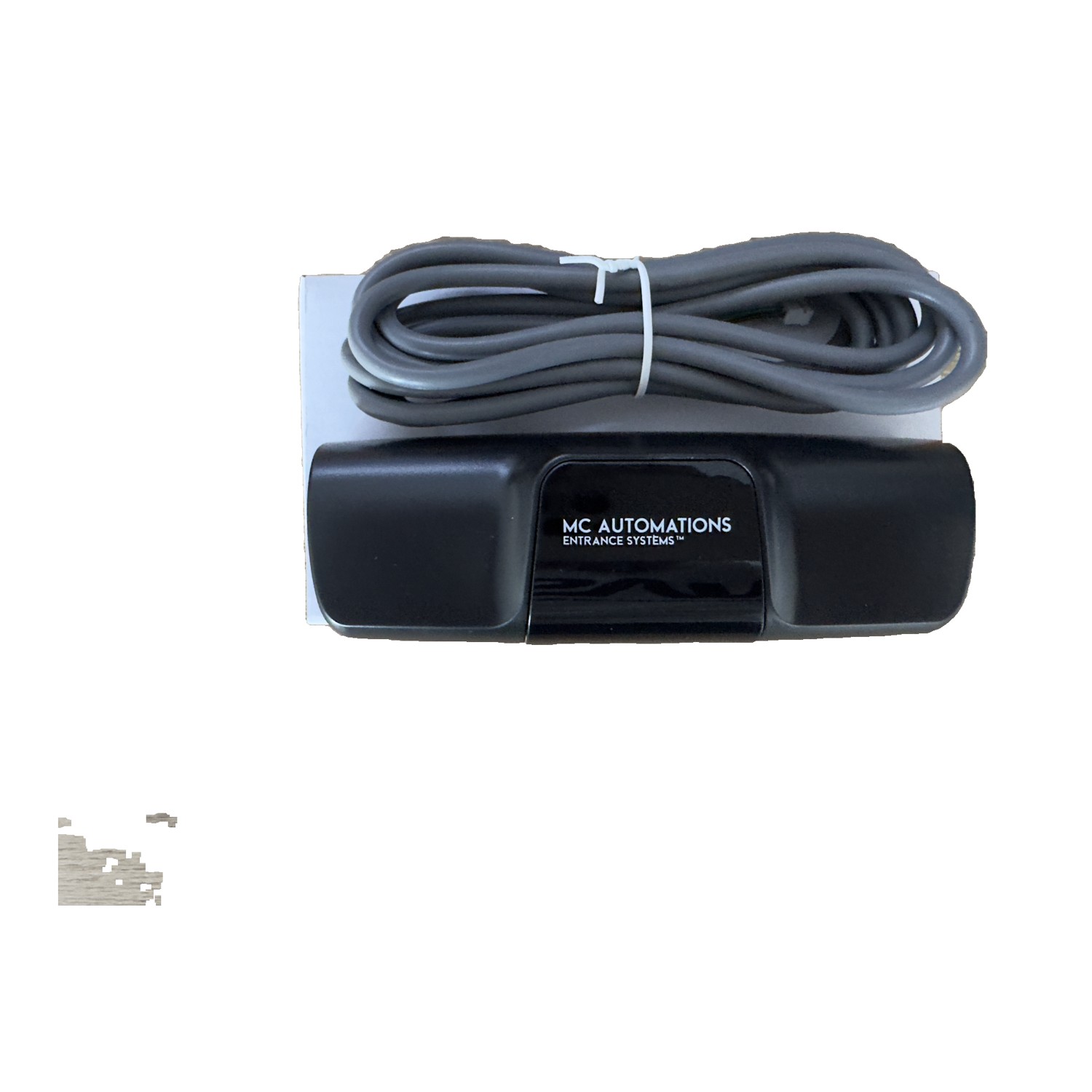

The door will not open
Check power first, then the activation sensor. A dirty, misaligned or blocked motion sensor is the usual cause. Objects parked in the detection zone, or a sensor knocked out of aim, will stop the door reading your approach.The door will not close (or keeps reopening)
This is almost always the safety sensor. Dirt, direct sun, a spider web across the lens or a stray object in the threshold makes the door think someone is there, so it stays open or reopens. Clean the sensor face and clear the threshold.The door is slow, rough or noisy
Rough or noisy movement points to worn rollers, a loose belt or a drive that needs servicing. Do not keep running a door that is grinding – book a service before a small part failure becomes a big one.The door opens and closes on its own
Phantom operation is usually a sensor picking up movement it should not – traffic, rain, or reflective floors. The detection zone or sensitivity needs adjusting by a technician.Nothing works at all
Check the mains supply and any isolator switch. During load shedding, a door with battery backup should keep running and fail safe-open; if it is dead, the backup battery may need replacing – a common spare part.When to call a technician
Automatic door troubleshooting has its limits: call a professional for anything involving force, speed, the operator or wiring – these affect safety. Our team handles repairs and keeps doors right with routine maintenance.Automatic door troubleshooting FAQ
Why does my automatic door keep reopening? Usually a dirty or sun-affected safety sensor, or an object in the threshold. Why will my automatic door not open? Check power, then a blocked or misaligned activation sensor.Before you call: a quick automatic door checklist
Most call-outs start with one of a handful of simple things. Running through this automatic door troubleshooting checklist first often restores the door in minutes, and when it does not, it gives your technician a head start and can shorten the visit.- Check the power and isolator. Confirm the mains supply is on and any wall isolator switch has not been knocked off.
- Wipe both sensors. Gently clean the activation and safety sensor lenses – dust, fingerprints and cobwebs are the most common cause of a door that will not open or keeps reopening.
- Clear the threshold and detection zone. Remove mats, stock, signage or parked trolleys sitting where the door senses movement.
- Look for an obvious obstruction. A small stone or bit of grit in the track can stall a sliding leaf.
- Note any beeps or error lights. A repeating pattern on the operator or control box tells the technician a lot before they arrive.
- Test during load shedding. A door with battery backup should keep cycling and fail safe-open; if it is dead, the backup battery is the likely culprit.
Need a technician?
Coetz handles automatic door troubleshooting, servicing and repairs across Gauteng, with spares in stock. Learn how automatic doors work or contact our team for a fast call-out.
More about Automatic Door Troubleshooting
Understanding automatic door troubleshooting helps you specify the right entrance the first time. The best results come from matching the operator, sensors and glass to the building and its traffic, then commissioning the door so it opens smoothly and closes safely. Cutting corners on any of these usually costs more later in call-outs and downtime, so it pays to get the specification right at the start.

Every site is a little different, so the automatic door troubleshooting that suits a busy mall entrance is not the same as a quiet office door. Traffic volume, opening width, safety requirements and the look of the frontage all shape the final choice, which is why a short site assessment is always worth the time before you commit.


Coetz supplies, installs and services automatic doors across South Africa, and we are happy to advise on automatic door troubleshooting for your project – from a single entrance to a multi-door development, backed by service and genuine spare parts.
What affects the price of automatic door troubleshooting
Two quotations for automatic door troubleshooting can differ widely, and the reason is almost always a specification difference rather than a margin difference. These are the variables that move the number.
- The structural opening. Measure the brickwork opening rather than an existing frame, and note whether the reveal is square.
- Traffic and duty cycle. A quiet office entrance and a centre entrance passing thousands of people a day are not the same specification.
- Power and controls. Confirm what supply reaches the head of the opening, and whether access control, an intercom or a fire panel must interface.
- Glass. Coetz™ glazes as standard with 6.38 mm clear laminated safety glass.
- Service access. Automatic door systems are installed and serviced by our team, so plan for periodic servicing from day one.
Once those are pinned down, automatic door troubleshooting becomes straightforward to quote and to programme. Send them through with your enquiry and we will come back with a firm price for automatic door troubleshooting.
Leave a Reply