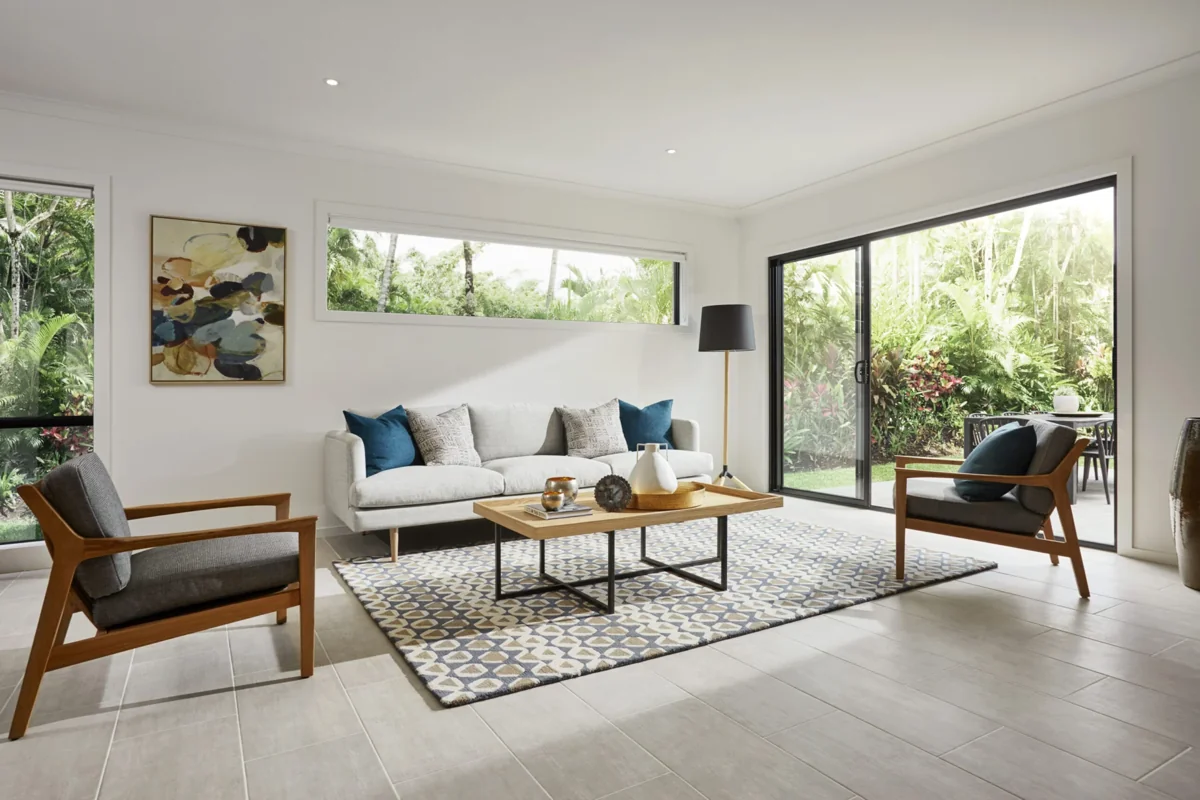
SANS 10400-N is the part of the building-regulations family that deals with glazing — a recognised, deemed-to-satisfy route to compliance.
SANS 10400-N is the part of the SANS 10400 family that deals specifically with glazing. This guide explains, in plain terms, what Part N covers and why it matters — without reproducing the standard, which remains the authoritative document.
What Part N covers

Part N addresses glazing in buildings: the selection of glass and the way it is installed so that it performs safely in its position. It works on a deemed-to-satisfy basis — it sets out recognised solutions that, if followed, are accepted as meeting the functional glazing requirement of the National Building Regulations. It does not stand alone: it draws on related standards, including SANS 613 for fenestration performance and wind loads, SANS 1263 for safety glazing materials, SANS 10137 for installation, and the structural provisions of SANS 10400-B.
Glazing in buildings and the deemed-to-satisfy idea
“Deemed-to-satisfy” means the standard offers a route that is accepted as compliant. Follow the recognised solution for your situation and the corresponding regulation is considered satisfied; alternatively, a competent person may motivate a different design. In practice this is why the same window system cannot simply be dropped into every opening — the acceptable solution depends on the position, size and exposure of the glazing.
Safety glazing considerations
A central theme of Part N is reducing the risk of human impact. Glazing in and around doors, and glazing at low level, are common places where safety glazing is expected. Low-level glazing — for example, glazing relatively close to floor level — is one of the situations that commonly triggers a safety-glazing consideration; the exact application and dimensions must be confirmed against the standard. Safety glazing materials are covered by SANS 1263 and should be permanently marked.

Windows, doors and shopfronts

Part N is relevant across the range: aluminium windows, aluminium doors, and shopfronts and commercial glazing. Doors and the panels beside them are treated as higher-risk human-impact locations; large spans and exposed positions bring wind loads into play through SANS 613. The larger or more unusual the opening, the more the specification needs to be considered rather than assumed.
Why application and dimensions matter

Two openings that look similar can need different glass. Position (is it a door, a low panel, a facade?), pane size, building height and exposure all influence what is acceptable. That is why a responsible specification starts from the actual opening and site, and why any exact threshold, thickness or limit must be confirmed against the applicable standard rather than generalised.
When engineering or competent-person input may be necessary
For ordinary openings, a deemed-to-satisfy solution is usually enough. For large panes, facades and structural glazing, unusual wind-load conditions, or specialist commercial work, a competent person may be needed to confirm or design the solution. If a requirement cannot be verified from a reliable source, the safe position is always to confirm it against the applicable standard or competent-person requirement.

SANS 10400-N in a nutshell
In a nutshell, SANS 10400-N sets recognised solutions for glazing in buildings and draws on SANS 613, SANS 1263 and SANS 10137. Follow the SANS 10400-N route for your situation and the glazing requirement is considered satisfied; unusual openings may need a competent person.
Who is responsible, and when to settle it
Most of the difficulty around SANS 10400-N is not technical. It is that nobody agreed early who was responsible for it, and the question surfaces at handover when the people who could have answered it have demobilised.
- The client or owner ultimately holds the building and its records, and is usually the party a future buyer, insurer or authority asks.
- The architect or designer sets the specification, and is the right person to confirm what a particular opening requires.
- The main contractor usually carries the obligation to deliver the completed work and its documentation.
- The installer or glazier is the party who actually fitted the glass and knows how it was fixed.
- The supplier — Coetz™ in this case — can confirm in writing what was supplied against a given order. That is a supply record, not a compliance opinion on the installed work.
Establish that allocation in writing before the glass is ordered. It is a five-minute conversation at the start of a project and a genuinely expensive one at the end, which is why it sits at the centre of any sensible discussion of sans 10400-n.
What a supplier can and cannot confirm
This distinction is worth being precise about, because it is where expectations most often diverge.
- What we can confirm: what was supplied on a given order — the product, the sizes, the glass specification and the date. That is a factual record of the supply.
- What we cannot confirm: whether the installed work is compliant. We are supply-only on aluminium windows and doors, so we do not inspect, fit or sign off the installation, and compliance depends heavily on how and where glass is installed.
That boundary is not evasion; it is the honest position of any supplier who did not carry out the installation. Where a project needs a determination on SANS 10400-N, that belongs with the project’s own professional team.
Records worth keeping
Whatever the answer turns out to be for your project, the same small set of records answers most later questions. Assemble them while the job is running rather than reconstructing them afterwards.
- The order confirmation showing what was supplied, in what specification and what sizes.
- The delivery documentation, showing what actually arrived on site and when.
- Photographs of the glass markings before the beading covers the edge. Once the beading is on, the marking is no longer visible.
- Photographs of the installation as it proceeds, particularly at junctions and fixings.
- Correspondence recording who was responsible for the specification and for any sign-off.
Those five items are usually what an inspector, insurer or incoming owner is actually asking for. Keeping them costs nothing during the build.
Questions to put to your professional team
If you are a homeowner or a client rather than a specifier, these are the questions that get you a usable answer on sans 10400-n without needing technical knowledge yourself.
- “Which openings on this project have a specific glass requirement, and who determined that?”
- “Who is responsible for producing any documentation, and is it in their scope?”
- “When in the programme will that be produced, and what do you need from me?”
- “What records should I be keeping as the work proceeds?”
- “If a requirement is unclear, who makes the call — and is that written down?”
Asked at the start, these are routine. Asked at handover, they are a dispute.
If the requirement is unclear
Uncertainty is common and is not in itself a problem — proceeding while pretending to certainty is. Where a requirement is genuinely unclear:
- Ask the specifier before the glass is ordered, not after it is installed.
- Get the answer in writing. A verbal instruction is worth very little a year later.
- Where nobody on the team can answer it, that is the point to bring in a suitably qualified professional rather than to guess.
- Do not rely on a supplier, a web page or a forum — including this one — as the determination. General guidance cannot account for your specific building.
This page is general guidance to help you ask better questions. It is not a compliance opinion, not a substitute for professional advice, and not a determination for any particular project.
Why this page does not summarise the standard
You will find pages that paraphrase SANS 10400-N in detail. We deliberately do not, for two reasons. Standards are revised, and a summary written once and left online becomes wrong without anyone noticing. And a paraphrase strips the context and definitions that give a clause meaning — which is precisely what matters when a real project turns on it.
So this page tells you how to get a reliable answer about SANS 10400-N rather than offering an unreliable one. Obtain the published document, or ask a suitably qualified professional who has it.
Using SANS 10400-N questions productively on a project
Most people asking about SANS 10400-N do not need to read it. They need to know that somebody on their project has read it and has taken responsibility for the answer.
- Identify who holds the standard and is applying it — usually the architect, specifier or a competent person.
- Ask for their determination in writing for the specific openings on your building.
- Record it alongside the order and delivery documentation.
- Do not substitute a supplier’s advice for that determination. We can tell you what we supplied; we cannot tell you whether the installed work satisfies SANS 10400-N.
- Revisit it if the design changes. A pane that moves, grows or changes location may change the answer.
Handled that way, SANS 10400-N stops being an anxiety and becomes a normal part of the project record.
Where SANS 10400-N fits in a project
SANS 10400-N is one input into a design, not a checklist a homeowner works through alone. On a well-run project it is applied by the specifier, reflected in the drawings and the glass schedule, and then simply ordered against.
The failure mode is a project where nobody has taken SANS 10400-N as their responsibility and everyone assumes somebody else has. That is worth testing explicitly at the start: ask who is applying it, and ask for their answer in writing.
As a supplier we sit downstream of that. We manufacture and supply to the specification we are given. Where a specification has been issued, we glaze to it; where none has, our standard is 6.38 mm clear laminated safety glass. Neither of those is a statement about SANS 10400-N compliance of the installed work.
This page is general guidance on how to handle SANS 10400-N questions on a project. It does not reproduce the standard, is not a compliance opinion, and is not a substitute for the published document or for professional advice.
Situations that commonly raise the question
- New builds. The specification is set at design stage and flows into the glass schedule, so SANS 10400-N questions should be settled long before ordering.
- Renovations. Existing openings may predate current practice, and altering one can change what applies to it.
- Commercial fit-outs. Shopfronts and entrances usually attract more attention than domestic openings, and the professional team is normally already engaged.
In each case the useful question is not what SANS 10400-N says — it is who on your project is applying it and whether that is written down. A project where that person is named, and their determination recorded against the drawings, rarely runs into difficulty later. A project where everyone assumed somebody else had it in hand is the one that discovers a gap at handover, when the people who could have closed it have already left site.
SANS 10400-N: frequently asked questions
What is SANS 10400-N in general terms?
It is the part of the SANS 10400 series dealing with glazing in buildings. This page does not reproduce its content. For what the standard actually says, obtain the published document or ask a suitably qualified professional — those are the only reliable sources.
Can a supplier tell me whether my project complies with SANS 10400-N?
No. Coetz™ is supply-only on aluminium windows and doors and does not inspect or sign off installed work. We can confirm what was supplied on an order. Whether the installed work satisfies any standard is a determination for the project’s professional team.
Who on my project should be answering SANS 10400-N questions?
The architect or specifier sets the specification; the contractor usually carries the obligation to deliver the work and its documentation. Establish that allocation in writing before glass is ordered.
Where can I obtain the standard itself?
Published standards are obtained from the standards body that issues them. A summary on a supplier’s website, including this one, is not a substitute for the published document.
What should I keep on file during the build?
Order confirmation, delivery documentation, photographs of glass markings before beading covers them, photographs of the installation, and written confirmation of who was responsible for the specification.
Sources
- SANS 10400-N glazing (sans10400.co.za)
- South African Bureau of Standards (SABS)
- AAAMSA technical guidance
Back to the Compliance Centre, or read the South African compliance overview.
What this means in practice on a real project
Reading about sans 10400-n is one thing; evidencing it on a live project is another. In our experience the difficulties almost never come from the requirement itself — they come from nobody having decided, early enough, who is responsible for the decision and who will produce the paperwork at the end. That question is worth settling at specification stage rather than at handover.
Decide who is responsible before the glass is ordered
On a supply-only order the responsibilities split. The supplier is accountable for manufacturing what was specified and for describing accurately what has been supplied. The party doing the installing is accountable for how the unit is fitted, packed and sealed. Whoever signs off the completed work is accountable for confirming that the installed result is appropriate for the application. Those are three different roles, and on smaller projects they are often three different companies, which is exactly how gaps appear.
Ask for the documentation while the job is still open
Whatever record your project needs is far easier to obtain during the contract than a year later. Keep the order confirmation showing what was supplied, keep the delivery documentation, and photograph the glass markings before the units are installed and the edges are covered by beading. Those three items answer most later questions about what was actually fitted, and they cost nothing to collect at the time.
Where Coetz™ fits in
Coetz™ supplies aluminium windows and doors glazed as standard with 6.38 mm clear laminated safety glass, and states on the order what has been supplied. Aluminium windows and doors are supplied only; automatic door systems are installed and serviced by our team. We are glad to confirm in writing what a given order contains, which is usually what a contractor or building inspector actually needs from the supplier.
An important limit on this page. The summary above is general guidance, not a compliance opinion, and it is not a substitute for the published standard or for professional advice. Requirements vary with the application, the building and the specifics of the installation. Where a decision about sans 10400-n carries safety or regulatory consequences, work from the current published text and engage a suitably qualified competent person for your project.